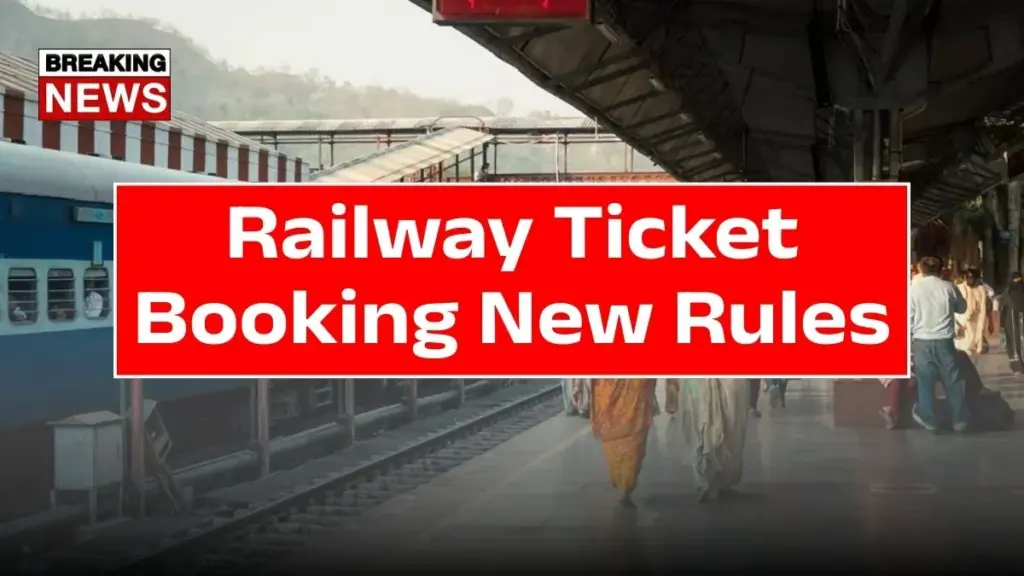
Railway Ticket Booking Rules: Indian Railways has introduced a significant change to its online reservation framework starting February 19, 2026, with a stronger emphasis on identity verification. The revised booking guidelines aim to streamline access to confirmed tickets while reducing misuse of the system during peak reservation hours. Over the years, advance ticket booking especially for high-demand routes and festive travel has seen intense competition within minutes of opening. According to reports and operational updates, the latest measures are designed to improve fairness by prioritising verified users during crucial booking windows.
The central feature of this revision is Aadhaar-based authentication for certain online bookings. While offline reservations at railway counters remain unaffected, online users may now face timing-based restrictions if their accounts are not Aadhaar-linked. The changes reflect Indian Railways’ broader push toward digital accountability and controlled access in the reservation ecosystem. For regular travellers, understanding how these guidelines function in practical terms has become essential.
Aadhaar Authentication and Priority Booking Access
Under the updated framework, linking Aadhaar to an IRCTC account plays a decisive role during the first day of advance ticket sales. As per guidelines, users who have not completed Aadhaar verification will be restricted from booking online tickets between 8 AM and 4 PM when reservations open 60 days before departure. This time slot is traditionally the most competitive, particularly for premium and long-distance routes.
यह भी पढ़े:
 Bank Holiday Schedule: All Banks to Be Closed 18–22 February 2026 and What Customers Should Know
From February 24 onward, restrictions become tighter. Non-verified accounts may be barred from booking between 8 AM and midnight on the opening day of reservations. In practical terms, only late-night access may remain available for such users. However, this does not prevent them from booking altogether—it simply regulates access during high-demand hours. Counter bookings and authorised railway offices continue to function as before, without Aadhaar linkage requirements.
Why Indian Railways Tightened Digital Reservation Rules
The move follows years of complaints about bulk bookings and misuse by unauthorised agents. Earlier, multiple fake accounts were allegedly used to secure tickets within seconds of the booking window opening, leaving genuine passengers waitlisted. Based on available documents and internal clean-up drives, lakhs of suspicious IDs have reportedly been deactivated in recent months.
An official familiar with digital operations explained, “The intention is not to inconvenience passengers but to ensure identity-backed booking. Aadhaar-based OTP verification allows the system to distinguish between automated activity and individual users.” While the Railways has not positioned this as a complete solution, it may reduce instances of ticket hoarding and black marketing during peak travel seasons.

Effect on Advance Reservation Planning
Indian Railways currently allows ticket booking 60 days before the journey date, a period crucial for families planning vacations, students relocating, or business travellers securing confirmed seats. Under the new policy, Aadhaar-verified users may experience smoother access during the most competitive hours. For non-verified users, the booking strategy may require timing adjustments.
For example, a family planning travel during Diwali on a high-demand route such as Delhi to Mumbai may find that tickets are exhausted within minutes of opening at 8 AM. In such cases, Aadhaar-linked accounts could improve the chances of securing confirmed seats. However, availability still depends on demand and seat capacity; verification does not guarantee allotment.
Clarification on Offline Booking and Eligibility Scope
It is important to clarify that the new rule applies strictly to online reservations made through the IRCTC platform. Passengers booking tickets at railway reservation counters are not required to link Aadhaar. This distinction ensures that individuals without digital access or Aadhaar linkage options are not excluded from the reservation system.
यह भी पढ़े:
 2026 EPS 95 Pension Update: Government Review on Minimum ₹7,500 Pension and Eligibility Details
Additionally, the rule is primarily focused on the first day of advance booking. Regular bookings on subsequent days remain accessible, though timing limitations may vary. This may differ by case depending on system updates or future notifications. Verification is recommended for those who frequently book tickets during the opening hours.
Verification Process and Compliance Requirements
The Aadhaar linking process is integrated into the IRCTC user profile section. Users are required to enter their Aadhaar number and complete OTP authentication through the mobile number registered with Aadhaar. Once verified, the account status is updated, enabling unrestricted booking during priority hours.
According to digital compliance norms, OTP-based authentication adds a second layer of security to prevent misuse. While the process generally takes only a few minutes, travellers are advised to complete verification well before peak booking days to avoid last-minute inconvenience. It is also recommended to ensure that the mobile number linked with Aadhaar is active, as OTP delivery depends on it.
Comparison with Previous Booking Framework
In the earlier reservation model, access to online booking windows was uniform for all registered users. Although ID verification existed at account creation, it was not mandatory for peak-hour prioritisation. This sometimes resulted in congestion, rapid sell-outs, and complaints regarding automated bookings.
The 2026 update marks a shift toward identity-driven access management. While the broader goal remains equitable ticket distribution, experts suggest that technical monitoring and continued account audits will be equally important. Aadhaar verification may deter misuse, but sustained enforcement and system monitoring will determine long-term effectiveness.
Limitations and Forward Outlook
Despite tighter controls, the updated rule does not ensure ticket confirmation. Availability continues to depend on demand, route popularity, and train capacity. Passengers should not interpret Aadhaar verification as priority quota allocation; it simply enables access during competitive hours. This distinction is important to avoid unrealistic expectations.
Going forward, Indian Railways may refine its digital policies further as passenger volume grows. With online ticketing forming the backbone of railway reservations, identity-backed systems may become standard practice. For now, travellers who rely heavily on early booking windows may find Aadhaar linkage a practical step to maintain uninterrupted access.
Disclaimer: This article is intended for general informational purposes based on publicly available updates and operational guidelines related to Indian Railways ticket booking policies. Reservation rules, access timings, and verification requirements may change as per official notifications issued by Indian Railways or IRCTC. Passengers are advised to consult the official IRCTC website or authorised railway sources for the latest and most accurate information before making travel arrangements.